
JLPT N5-N4 Counters, Floors, Scores & Ordinal Numbers Summary
日語數量詞、樓層與分數總整理 | JLPT N5 & N4
🔢 助数词 (Counters)
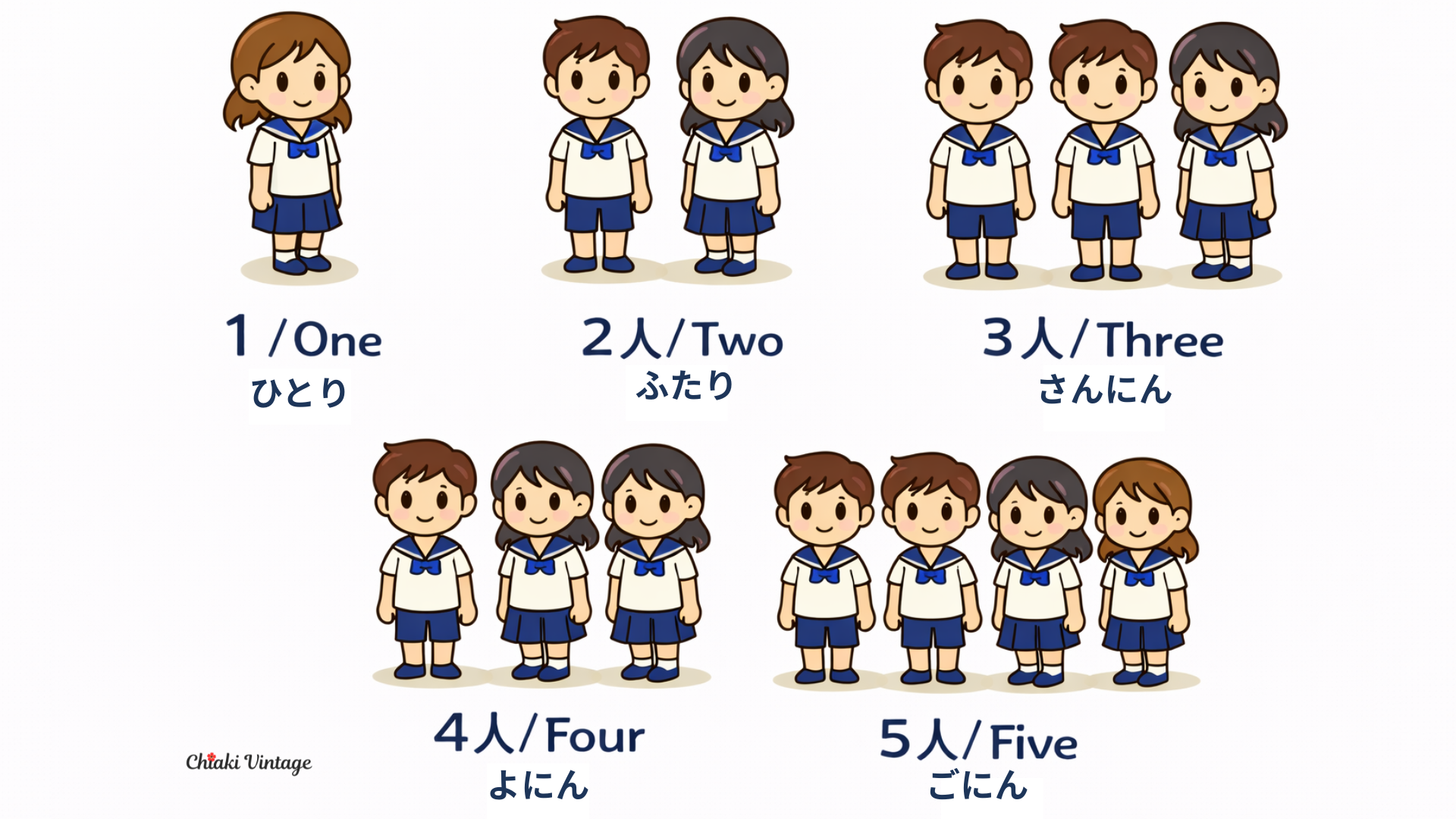
数量的世界,从「人」开始 ✨
👤 人(〜人)
学生は五人います。
There are five students.
家族は三人です。
There are three people in my family.
💡 Note|〜人 的特殊读法 Special pronunciation of "人"Learn more
一人・二人
不读「いちにん/ににん」,
而是 ひとり/ふたり。
从 三人(さんにん) 开始才使用「〜にん」。
📦 通用(〜つ)
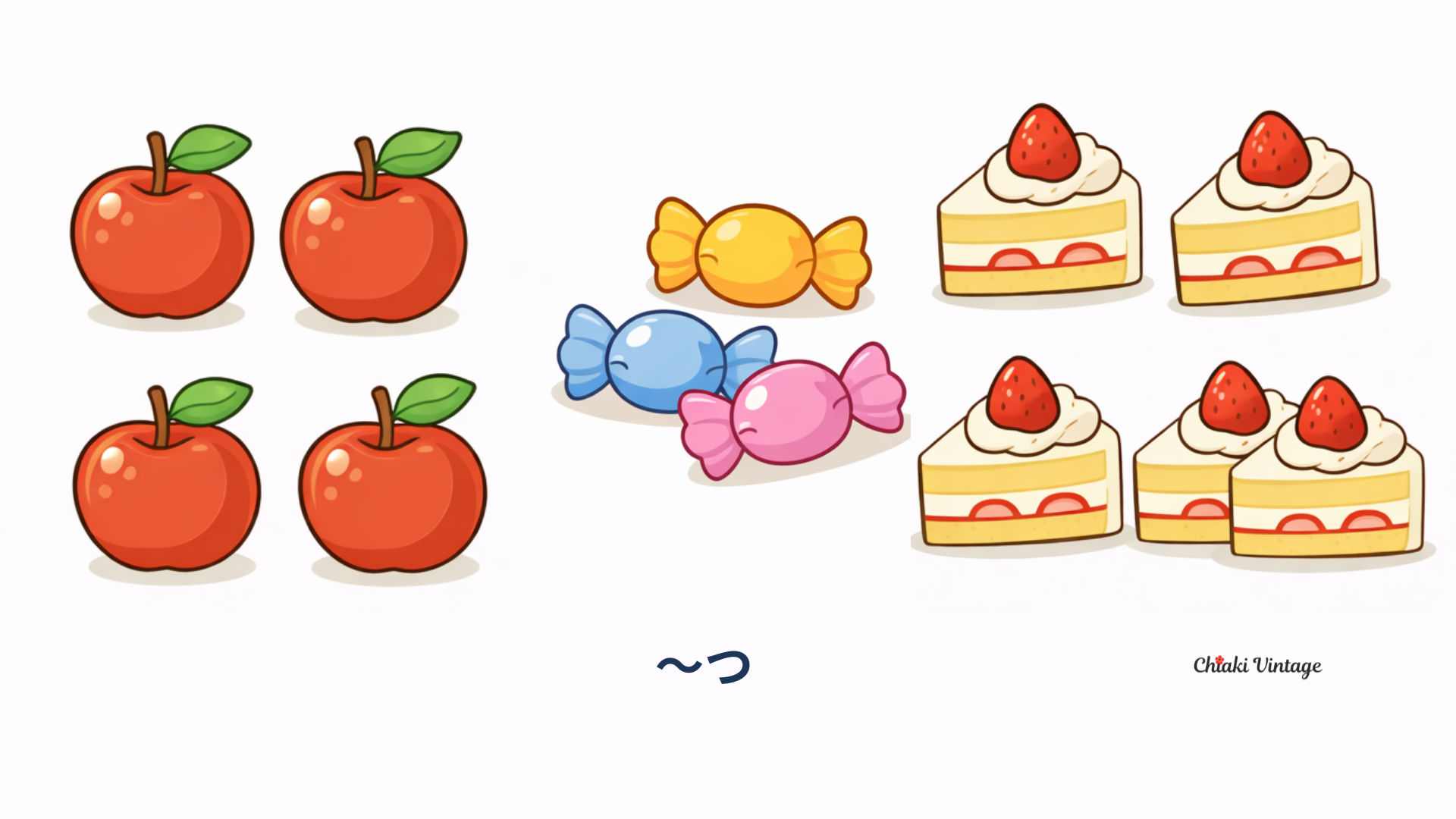
数量的世界,从つ开始 ✨
りんごを二つください。
Two apples, please.
ケーキが三つあります。
There are three cakes.
💡 Note|什么时候使用「〜つ」When to use 「〜つ」?Learn more
〜つ is used for:
・Small, three-dimensional objects
(spheres, cubes, everyday items)
👉 りんご、ケーキ、おもちゃ
・Abstract or intangible things
(things you cannot touch or hold)
👉 約束(promise)、理由(reason)、考え(idea)
・Ordering from a menu
👉 コーヒーを一つください。
📌 When you are not sure which counter to use,
〜つ is a safe and natural choice.
📦 通用(〜個)
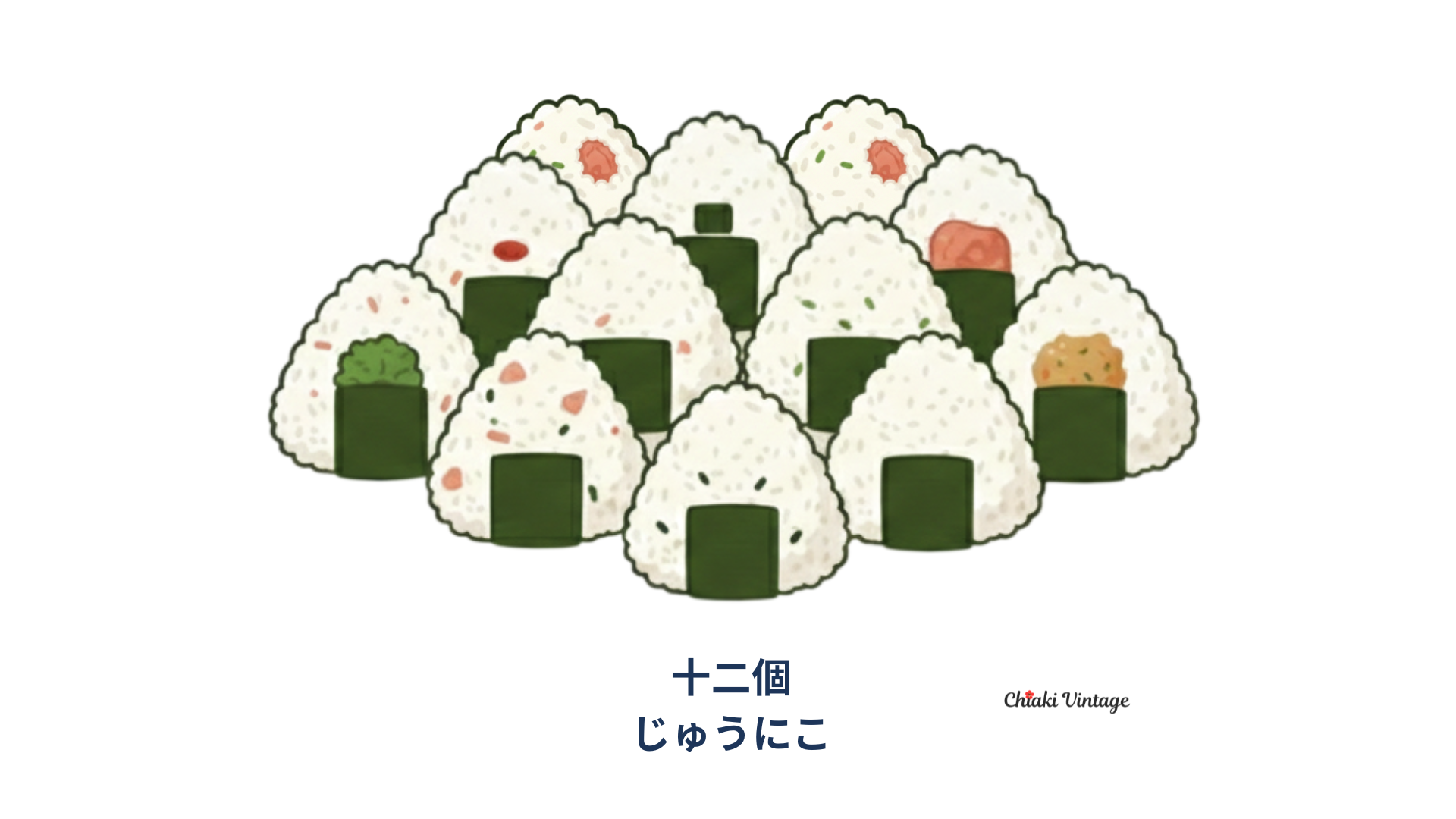
数えるなら「〜個」で無限大まで!✨
りんごを十一個ください。
Eleven apples, please.
本を十五個買いました。
I bought fifteen books.
💡 Note|什么时候使用「〜個」When to use 「〜個」?Learn more
〜個 is used for:
・Small or countable objects
(fruits, toys, books, stationery)
👉 りんご、鉛筆、箱
・Anything you can count, especially 11 or more
(when 〜つ cannot be used)
👉 十一個以上の物は〜個で数えます。
・Universal counter
(safe choice when unsure which counter to use)
👉 ケーキを十二個ください。
📌 〜つ は 1–10、〜個 は 11以上の数字に使うのが自然です。
📄 扁平(〜枚)
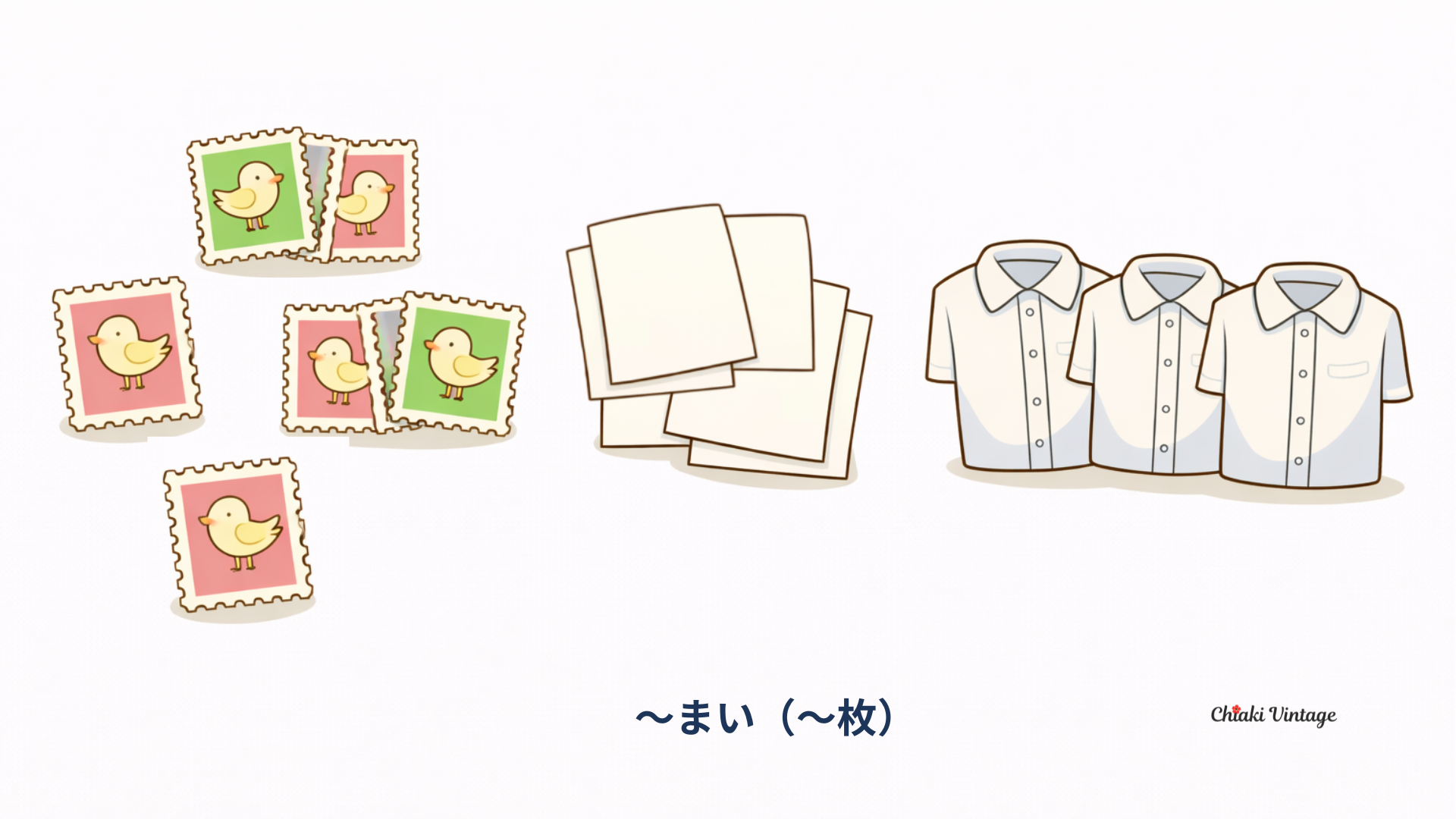
平面的数量,也很重要 ✨
紙を一枚ください。
A piece of paper, please.
切手を二枚買いました。
I bought two stamps.
💡 Note|〜枚 vs 〜本 (Flat vs Long Objects)Learn more
Both 〜枚 and 〜本 are counters for objects,
but they describe different shapes:
・〜枚(まい)
Used for flat, thin objects.
Paper, tickets, photos, stamps, shirts, plates.
👉 紙を一枚ください。 (One sheet of paper, please.)
・〜本(ほん)
Used for long, thin objects.
Pens, bottles, bananas, umbrellas, roads, rivers.
👉 ペンを一本持っています。 (I have one pen.)
⚠️ The key difference is shape, not size.
Flat → 〜枚 | Long & cylindrical → 〜本
✏️ 细长(〜本)
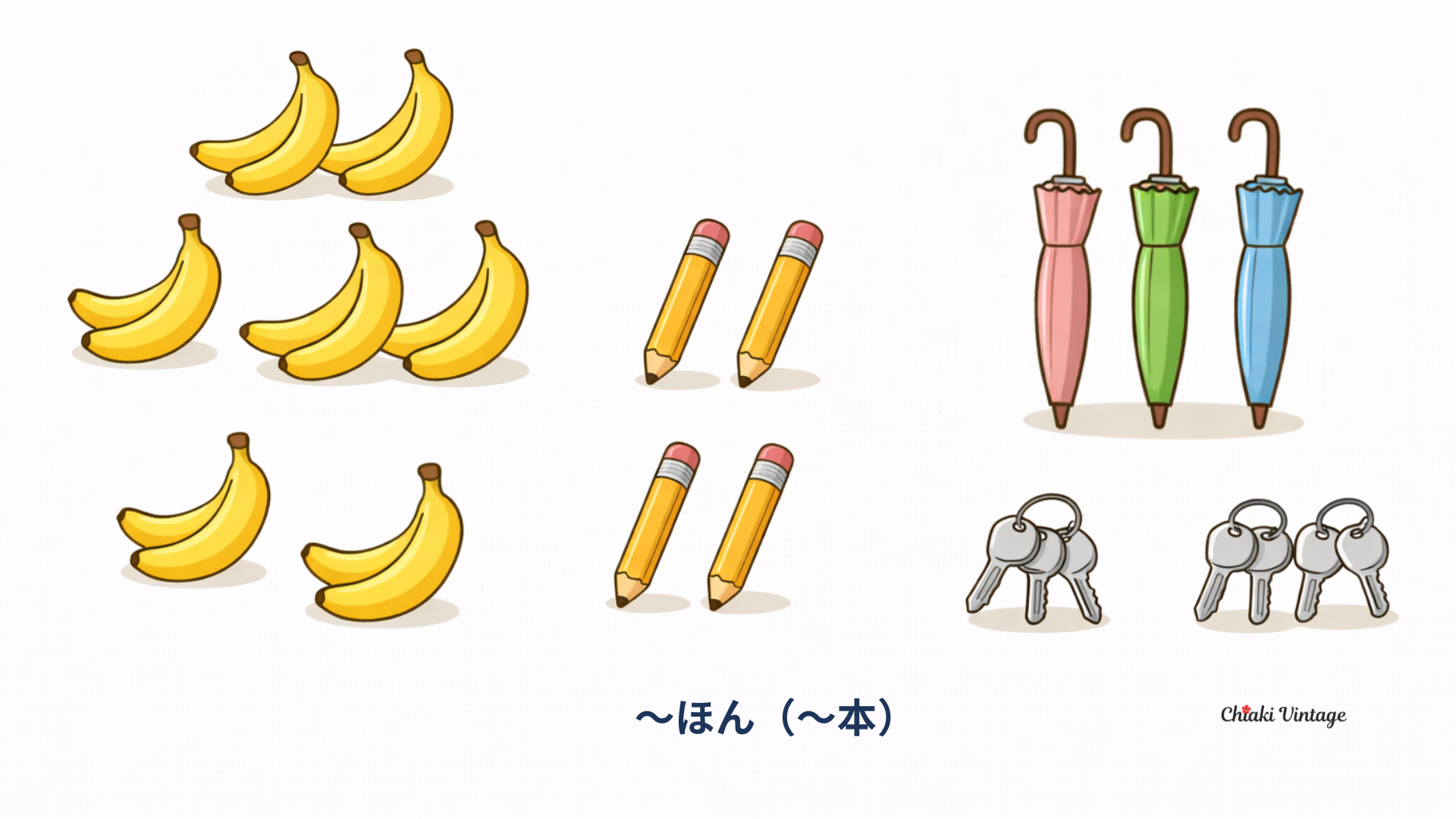
细长的东西,一本一本数 ✨
ペンを一本持っています。
I have a pen.
バナナを三本食べました。
I ate three bananas.
💡 Note|〜本 会发生音变 When do Phonetic Changes occur?Learn more
数字不同,读音会变化:
・一本 → いっぽん
・三本 → さんぼん
・六本 → ろっぽん
👉 JLPT N5 常考音变之一
📏 When to use the counter 「〜本」
The counter 〜本 (〜ほん) is used for long, thin objects.
These objects are usually cylindrical, natural, linear, or even digital.
• Cylindrical objects:
Pens, bottles, pillars, bats, and ties.
These items have a clear round or tube-like shape.
• Natural long objects:
Trees, carrots, bananas, and tails.
These are long objects commonly found in nature.
• Linear objects:
Ribbons, strings, ropes, and hair.
These items are thin and flexible.
• Digital or media content:
TV programs, movies, and online videos.
These are counted as one continuous unit of content.
🐾 動物(〜匹)
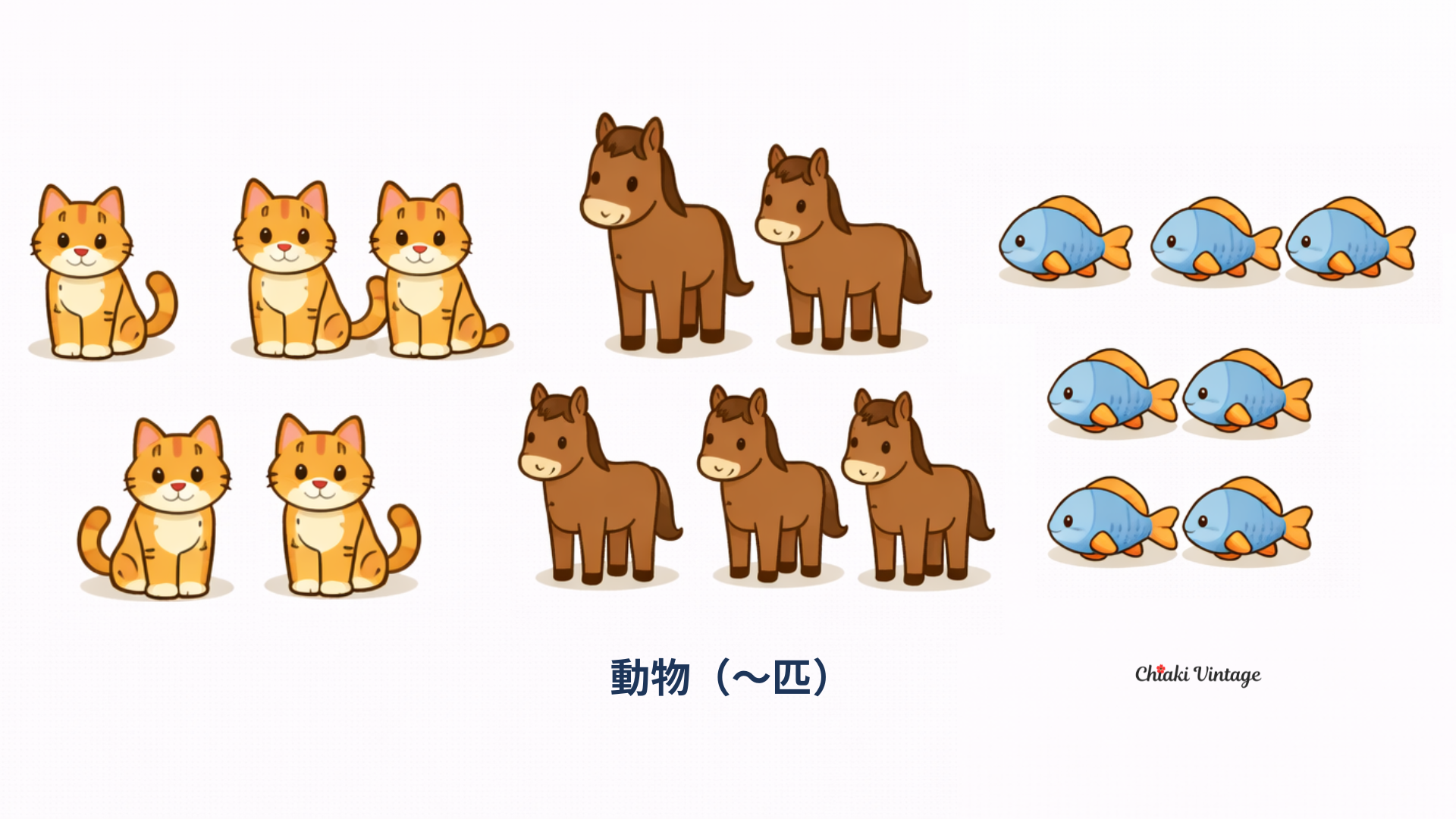
小动物的数量世界 🐾
猫が二匹います。
There are two cats.
魚を一匹買いました。
I bought a fish.
💡 Note|〜匹 的音变规则 Phonetic Rules for 〜匹Learn more
「ひ」开头的助数词容易音变:
・一匹 → いっぴき
・三匹 → さんびき
但 二匹(にひき) 不变。
🚗 機械・車(〜台)
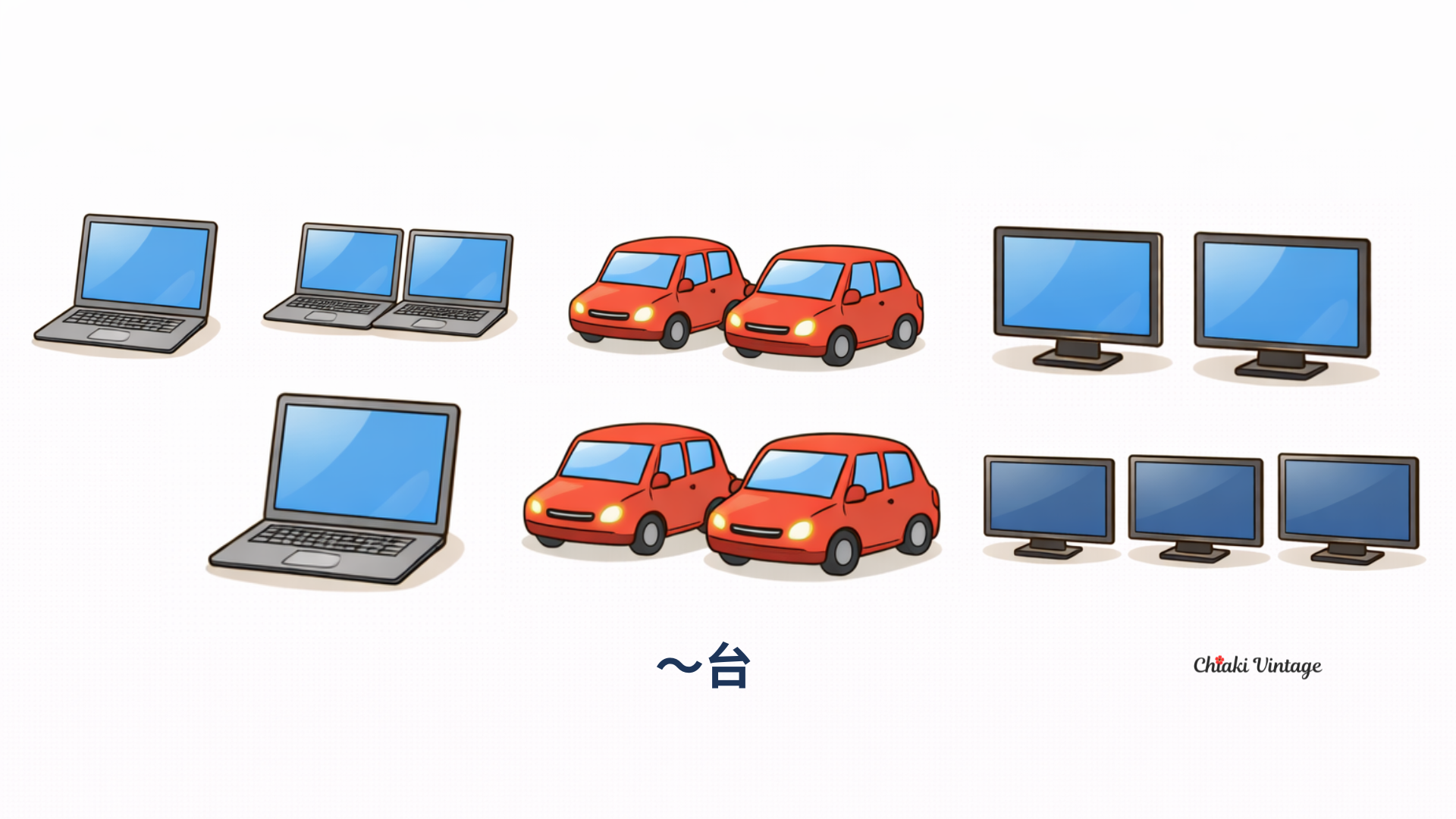
Japanese counter 〜台 illustration showing computers, cars, and televisions.✨
車が一台あります。
There is a car.
パソコンを二台使っています。
I am using two computers.
☕ 飲み物(〜杯)
コーヒーを一杯飲みます。
I drink a cup of coffee.
水を二杯ください。
Two glasses of water, please.
💡 Note|〜杯 会发生音变 When do Phonetic Changes occur?Learn more
は行助数词(杯・匹・本)在 1 / 3 / 6 / 8 / 10 时常发生音变
数字不同,读音会变化:
・一杯 → いっぱい
・三杯 → さんばい
・六杯 → ろっぱい
👉 JLPT N5 常考音变之一
🔁 次數(〜回)
日本へ一回行きました。
I have been to Japan once.
三回練習しました。
I practiced three times.
🏢 楼层 (Floors)
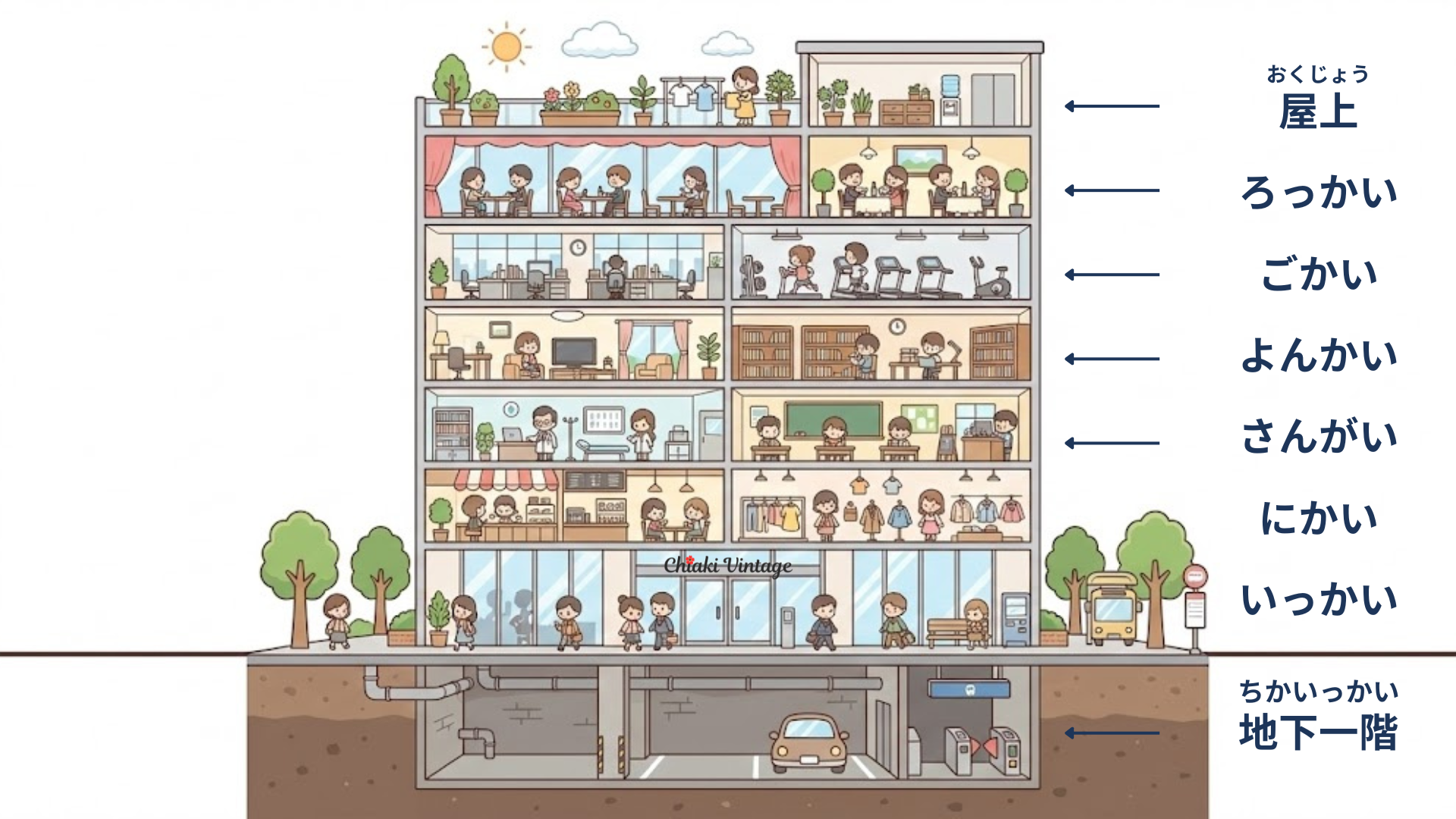
私の部屋✨
レストランは三階にあります。
The restaurant is on the third floor.
私の部屋は五階です。
My room is on the fifth floor.
⚠️ 注意|回 和 階 的区别 The Difference Between 回 and 階Learn more
一回(いっかい)= 次数
一階(いっかい)= 楼层
读音一样,但 汉字和意思完全不同。
📊 分数与百分比 (Scores & Percentages)
テストは八十点でした。
I got 80 points on the test.
出席率は百分の九十です。
The attendance rate is 90 percent.
📝 日本考试分数读法与等级
このテストは満点です。
This test has a perfect score.
七十点以上で合格です。
70 points or more is a pass.
📝 Note|日本考试分数的说法 How to Say Exam Scores in Japanese?Learn more
・満点(まんてん)= 满分
・得点(とくてん)= 实际得分
・七十点以上で合格
零点 口语常说 ゼロ。
🥇 序数词 (Ordinal Numbers)
私は一番好きです。
I like it the most.
これは第一課です。
This is Lesson 1.
💡 Note|Different ways to say “first” in JapaneseLearn more
Japanese has several words for “first”, depending on the situation:
・一番(いちばん)
Used for ranking, preference, or “the best”.
👉 一番好きです。 (I like it the most.)
・第一(だいいち)
A formal or written expression.
Often used for lessons, chapters, rules, or announcements.
👉 第一課 (Lesson 1)
・一位(いちい)
Means 1st place in a competition or ranking.
👉 一位になりました。 (I got first place.)
・一回目(いっかいめ)
Used for order or number of times something happens.
👉 日本へ行くのは一回目です。 (It’s my first time going to Japan.)
📌 These words are not interchangeable.
Choose the one that matches ranking, formality, or sequence.
Keep in Touch 🌷
Get cute Japanese learning resources,
gentle word cards, and small notes from time to time.
ときどき、かわいい日本語の学習リソースをお届けします
No spam, just little notes. たまにだけ